Wallpapering – how to get a neat and durable result
Wallpaper gives a room character, but uneven walls, the wrong paste and poor pattern matching show immediately. Here is what wallpapering involves, what affects the price and what to ask the decorator.
By the Fixtorget editorial team · Updated 8 November 2026 · 3 min read
What wallpapering involves
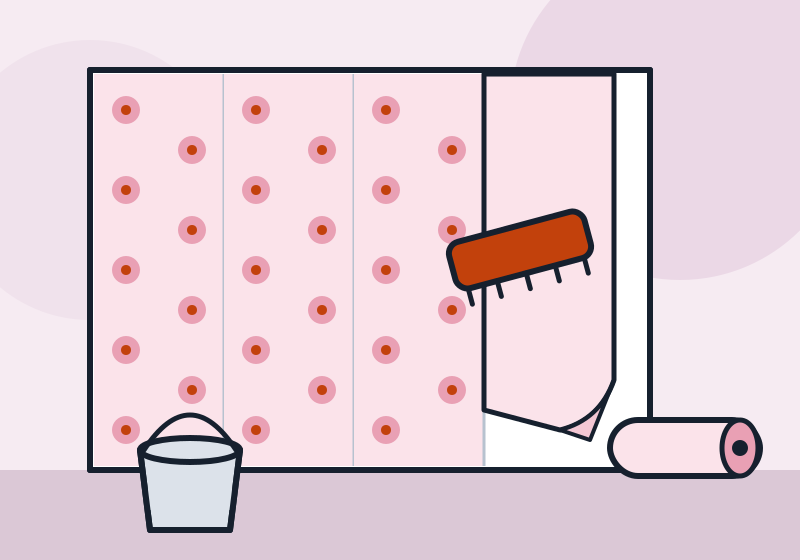
Wallpapering starts with removing the old wallpaper, if needed. The walls are then filled and sanded, and primed or pre-treated so that the paste adheres evenly. The wallpaper is then hung with the right paste and pattern matching, and the edges are cut neatly against the ceiling, floor, windows and doors.
There are different types of wallpaper: paper wallpaper, non-woven wallpaper that is pasted directly on the wall, vinyl wallpaper and textile wallpaper. They have different requirements for paste and surface, and some are harder to hang than others.
What affects the price?
Ask for a quote, as the condition of the walls has a big impact. The most important factors are:
- The number of drops or square metres of wall.
- Whether old wallpaper must be stripped and how many layers there are.
- How much the walls need filling and sanding.
- Wallpaper type and pattern – a large pattern repeat means more waste and takes longer.
- Ceiling height, sloping ceilings, alcoves and many windows and doors.
- Moving furniture and protection.
Also ask who buys the wallpaper and how much waste the decorator allows for.
Preparation and choosing wallpaper
Order wallpaper from the same production run, known as the batch number, so that the colour is even. It is better to buy an extra roll than too few – it can be hard to get the same batch later. Ask the decorator to work out how many rolls are needed based on the pattern repeat.
If the wallpaper is going in a kitchen or near a shower, choose a durable, wipeable wallpaper. In bathrooms and other wet rooms you must follow the industry rules for wet rooms – ordinary wallpaper never replaces an approved waterproofing layer.
Empty the room as much as possible or gather the furniture in the middle of the room, and take down pictures, shelves and curtain rails. Bear in mind that the room should have an even temperature and not too dry air while the paste dries, so avoid having windows open or radiators on full straight after wallpapering.
Older houses and safety
In older houses there may be several layers of wallpaper, sometimes on canvas or board. This can hide cracks or moisture damage that need repairing before new wallpaper is hung. Moisture behind wallpaper can cause mould, so ask the decorator to tell you if they find anything suspicious.
If sockets or switches are to be removed, it must be done safely. Work that goes beyond loosening and refitting cover plates, such as moving or replacing sockets, must be carried out by an electrical installation company registered with Elsäkerhetsverket.
ROT tax deduction
The labour cost of wallpapering in your home normally qualifies for the ROT deduction of 30 %. Wallpaper, paste and filler do not qualify. ROT is capped at SEK 50,000 per person per year, within the overall cap of SEK 75,000 for ROT and RUT combined. The deduction is applied on the invoice provided labour and materials are shown separately.
What the quote should include
- Which rooms and walls are included, with approximate area.
- Stripping of old wallpaper.
- Filling, sanding and priming.
- Wallpaper type, who buys it and the estimated number of rolls.
- Protection, moving furniture and cleaning.
- Labour and materials listed separately plus the estimated ROT deduction.
- How hidden damage in the wall is handled and priced.
Questions to ask and common mistakes
Ask how they pre-treat the wall for your particular type of wallpaper, where they start hanging so that the joins are as inconspicuous as possible and how they handle patterns that need to run evenly around corners. Ask to see photos of previous wallpapering jobs.
Common mistakes include papering uneven or dusty walls, mixing rolls from different batches, using the wrong paste and starting at a window or corner so that the pattern ends up crooked.
Getting quotes via Fixtorget
State which rooms are involved, the approximate wall area and whether you have already chosen wallpaper when you post the job on Fixtorget. Photos of the walls help the decorator assess the preparation. Up to four vetted companies can contact you, and when the job is finished you can leave a review that helps the next customer.
Frequently asked questions
Does old wallpaper have to be stripped before new is hung?
Usually, yes. New wallpaper over old can come loose, bubble or show the joins underneath. The decorator can assess whether, exceptionally, it can be hung on top.
Do I get the ROT deduction for wallpapering?
Yes, for the labour cost at 30 %. Wallpaper and paste count as materials.
How many rolls of wallpaper do I need?
It depends on the wall area, the roll length and the pattern repeat. Let the decorator work it out and consider buying an extra roll from the same batch number.
Can you wallpaper a bathroom?
There are wallpapers for damp environments, but in the wet zone an approved waterproofing layer is required under the industry rules for wet rooms. Ask the decorator and see our guide to bathroom renovation.
This information is general and may change. Always check the current rules with the relevant authority, for example Skatteverket, Elsäkerhetsverket or Transportstyrelsen.
Get quotes from companies near you
Describe the job in a few minutes – free and with no obligation.
Post a job