Painting woodwork – doors, skirting, stairs and kitchen doors
Freshly painted doors, skirting and stairs can lift an entire home. Painting woodwork is, however, precision work where preparation and the right paint determine how long the finish lasts. Here is what to consider.
By the Fixtorget editorial team · Updated 8 November 2026 · 3 min read
What painting woodwork involves
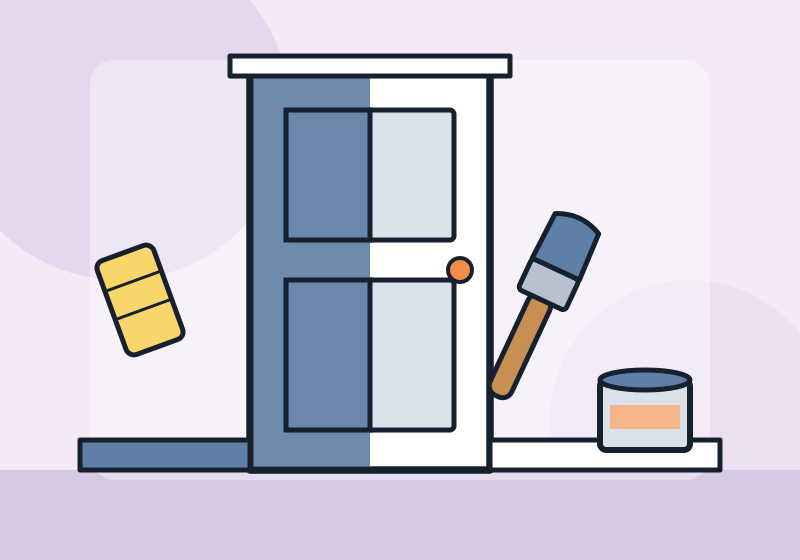
Painting woodwork means painting interior joinery: doors and frames, architraves, skirting boards and cornices, window boards, stairs, banisters, wardrobes and kitchen cabinet doors. These surfaces are exposed to a lot of wear and need to be wipeable, so the demands on adhesion and hardness are higher than for walls.
The work consists of cleaning and degreasing, sanding or keying the old paint, filling holes and damage, caulking against walls, priming and usually two coats of joinery paint. Doors and cabinet doors can sometimes be removed and painted lying flat or spray-painted for a smoother finish.
What affects the price?
Woodwork painting is often priced per item or per running metre. Ask for a quote. Factors that affect the price are:
- The number of doors, cabinet doors and metres of skirting.
- Whether the surfaces are flat or profiled with lots of detail.
- The condition and type of the old paint.
- Whether doors and cabinet doors are painted in place or removed and sprayed.
- Stairs and banisters, which require a lot of handwork and planning so they can be used during the work.
- A change of colour, which may require more coats.
Choice of paint and sheen
Woodwork is usually painted with a water-based or alkyd-based joinery paint in a semi-gloss or gloss finish, as it withstands wear and is easy to wipe. Stairs and floors require a floor paint or lacquer that can cope with foot traffic.
If the old paint is oil-based or glossy, it needs keying and often priming with an adhesion primer. Ask the painter how they test adhesion. Kitchen doors with foil or melamine require special pre-treatment, and not all such doors are suitable for painting.
Safety and older paint
In older houses, old layers of paint on woodwork may contain lead. Sanding such paint creates hazardous dust, so the work must be done with dust-limiting methods and protective equipment, and the waste must be disposed of correctly. Ask the company how they deal with this.
Make sure the rooms are ventilated during and after painting, especially if solvent-based products are used. Follow the manufacturer's instructions on drying time before doors are closed and cabinet doors used.
ROT tax deduction
The labour cost of painting woodwork in your home normally qualifies for the ROT deduction of 30 %. Paint and materials do not qualify. If cabinet doors or doors are taken to the painter's own workshop and painted there, ROT does not apply to that work, since work carried out in the company's own premises does not qualify. ROT is capped at SEK 50,000 per person per year, within the overall cap of SEK 75,000 for ROT and RUT.
What the quote should include
- Number of doors, cabinet doors, window boards, stair treads and metres of skirting.
- Preparation: cleaning, sanding, filling, caulking and priming.
- Paint type, brand, colour, sheen and number of coats.
- Whether anything is removed or sprayed, and where the work is carried out.
- Protection of floors, walls and fittings, and cleaning.
- Labour and materials listed separately plus the estimated ROT deduction.
- Timetable and when the surfaces can be used again.
Questions to ask and common mistakes
Ask how they pre-treat your particular old paint, whether they roll, brush or spray and how they avoid brush marks and runs. Ask for photos of previous jobs with similar surfaces.
Common mistakes include painting without keying and degreasing so that the paint peels, using wall paint on woodwork, forgetting to caulk against the wall so that gaps show and closing doors and cabinet doors before the paint has cured so that they stick.
Getting quotes via Fixtorget
Roughly count how many doors, cabinet doors and metres of skirting are involved, and upload photos when you describe the job on Fixtorget. Up to four vetted painting firms can contact you. It is free for you, and you can compare the companies' cost specifications before you decide.
Frequently asked questions
Do I get the ROT deduction for painting woodwork?
Yes, for the labour cost when the work is carried out in your home. If doors or cabinet doors are painted in the painter's own workshop, ROT does not apply to that work.
Can kitchen cabinet doors be painted?
Often, yes, but foil-covered or melamine-faced doors require special pre-treatment and are not always suitable. Let the painter assess your doors.
Which sheen should I choose?
Semi-gloss or gloss is most common on woodwork, as they withstand wear and are easy to wipe. A lower sheen hides unevenness better but is more delicate.
How long does the paint need to dry?
It depends on the type of paint. The surface may be touch-dry after a few hours, but full curing takes longer. Follow the manufacturer's instructions and ask the painter.
This information is general and may change. Always check the current rules with the relevant authority, for example Skatteverket, Elsäkerhetsverket or Transportstyrelsen.
Get quotes from companies near you
Describe the job in a few minutes – free and with no obligation.
Post a job