Car fault finding: fault codes, diagnostics and costs
If the engine warning light is on or the car is behaving strangely, fault finding is often needed. Here we explain how diagnostics work, why a fault code is not always enough and how to avoid unnecessary costs.
By the Fixtorget editorial team · Updated 8 November 2026 · 3 min read
What does fault finding involve?
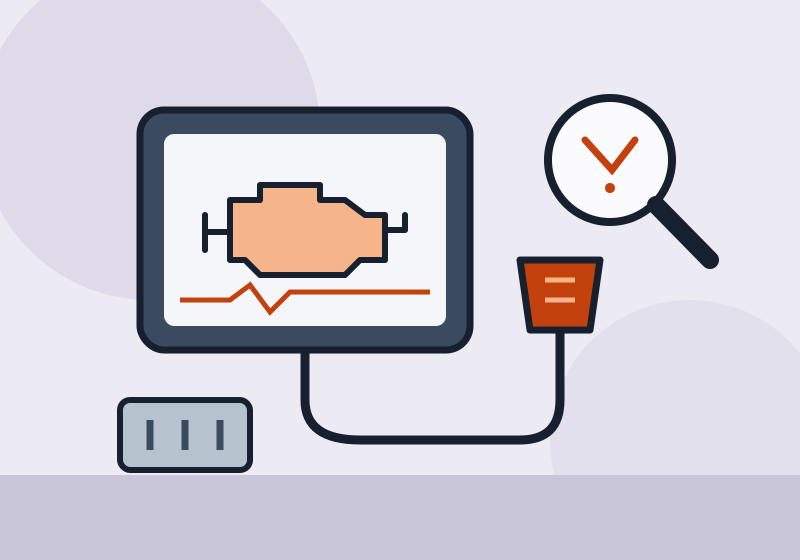
Modern cars have many control units that monitor the engine, gearbox, brakes, airbags and electrical system. When something deviates, a fault code is stored and sometimes a warning light comes on. The workshop connects a diagnostic tool to the car's diagnostic port and reads the codes.
However, a fault code often points to a symptom rather than exactly which part is faulty. A code relating to a sensor may be caused by the sensor itself, a cable, a connector or a completely different problem. Proper fault finding therefore involves measurements, test drives and knowledge of the car model.
When should you seek help?
- The engine warning light is on or flashing
- The car loses power or runs unevenly
- Unusual noises, smells or smoke
- Recurring electrical problems, for example the battery going flat
- Warning lights for brakes, airbags or steering
A flashing engine light, red warning lights or problems with the brakes and steering should be taken seriously. Do not keep driving if you are unsure; contact the workshop or roadside assistance.
What affects the price?
Fault finding is often charged per started time period or as a fixed diagnostic fee. The cost is affected by:
- How difficult the fault is to reproduce
- Whether the fault is intermittent and only occurs sometimes
- The need for make-specific tools and software
- The number of control units and systems involved
Ask for a quote or a cap on the fault-finding cost before work begins. Car fault finding does not qualify for ROT or RUT deductions.
Preparations
The more information you give, the faster the workshop can find the fault.
- Write down when the fault occurs, at what speed and temperature
- Photograph warning lights and messages on the instrument panel
- Mention any recent repairs
- Bring the service history
Your rights as a consumer
The Consumer Services Act (Konsumenttjänstlagen) also applies to fault finding. Agree on what the fault finding may cost and that the workshop must contact you before repairs or further fault finding beyond what was agreed. The price information can be oral, but ask for it in writing if possible. An approximate price may not be exceeded by more than 15 per cent. In the event of a dispute, you can get advice from Hallå konsument and turn to ARN.
What should the quote include?
- What the fault finding covers and the maximum cost
- That you receive a report with fault codes and the workshop's assessment
- That the repair is quoted separately
- Whether the fault-finding cost is deducted if you let the workshop carry out the repair
Common mistakes
- Just clearing the fault code and hoping the fault goes away
- Replacing parts on a hunch based on a fault code
- Not setting a cost cap for the fault finding
- Driving for a long time with a flashing engine light
Find the right workshop via Fixtorget
Describe the symptoms in as much detail as you can and attach pictures if possible. Workshops can ask questions in the chat before giving a price, and if the fault finding shows that more needs to be done, the workshop can send a supplementary specification that you approve yourself.
Frequently asked questions
Can I read fault codes myself?
Yes, simple code readers are available. But a fault code rarely tells you exactly what is wrong, so interpreting it often requires a workshop.
Does fault finding cost money even if the fault is not found?
Often yes, since the labour time has been spent. That is why you should agree on a cost cap before the workshop starts.
Can I drive with the engine light on?
If it is lit steadily, the car can often be driven carefully to a workshop. If it is flashing, or the car loses power, you should stop and contact a workshop or roadside assistance.
This information is general and may change. Always check the current rules with the relevant authority, for example Skatteverket, Elsäkerhetsverket or Transportstyrelsen.
Get quotes from companies near you
Describe the job in a few minutes – free and with no obligation.
Post a job